When the Black Background Disappears
Reading response to American Artist, Black Gooey Universe
Among the many pivotal moments in the “evolution” of computer culture, people tend to remember which generation of chips boosted processing speed, which startups secured massive funding rounds—yet rarely do they pay attention to the shifting colors of the screen, that interface through which we engage with technology. From the early black-background terminals with green or white text to the eventual dominance of white screens in GUI, this transformation was framed as a move towards “friendliness” and “intuitiveness,” as if a blank sheet of paper inherently provides a sense of security. However, in Black Gooey Universe, American Artist meticulously unravels the historical, technological, and socio-structural entanglements behind this shift, revealing that the transition from black screens to white screens carries a hidden history intertwined with race, power, and ideology.
When I first read this piece, a question immediately struck me: When we tap away at our keyboards, clicking on file icons, do we ever stop to think about whose values are embedded in these interfaces? Have we ever questioned the default position that the white screen implies? Black Gooey Universe forces us to confront an uncomfortable reality: When did “white” become an unquestioned neutral? And when did “black” become nothing more than the background—something to be erased?
The Labs That “Nurtured White Male Creativity”
The article first lays bare why Silicon Valley became synonymous with technological innovation: its close ties to Stanford University, particularly its engineering school, which flourished post-WWII thanks to defense contracts and venture capital. The establishment of the Stanford Research Institute (SRI) in the 1940s and 1950s brought together a privileged class of white male engineers, providing them with a pressure-free, well-funded environment where they could lounge in beanbag chairs and “freely” ponder big problems. This “lab culture” was later replicated at Xerox PARC, Apple, Google, Facebook, and beyond, forming the blueprint for what we now romanticize as Silicon Valley’s ethos of “openness, innovation, and free thinking.”
But as the author points out, this “laboratory freedom” was never meant for everyone. It was a freedom designed for straight white men, a closed-circle club that received an influx of government and corporate funding. Here, “freedom” had an extremely narrow definition: for white men, it meant an absence of constraints; for everyone else, it meant locked doors. From SRI to Xerox PARC, even the most technologically advanced institutions remained painfully homogenous. This is what the author refers to as the liberal impetus of Silicon Valley—a system that prides itself on openness while structurally excluding non-white, non-male, and non-heteronormative perspectives.
The White Screen as Revolution
When we think of “GUI,” we often recall the legendary 1968 Mother of All Demos, where Doug Engelbart showcased the mouse, clickable icons, real-time collaborative editing, and other groundbreaking interface concepts. Xerox PARC refined these ideas for commercial use, and Apple, with the Lisa and later the Macintosh, brought them to the mass market.
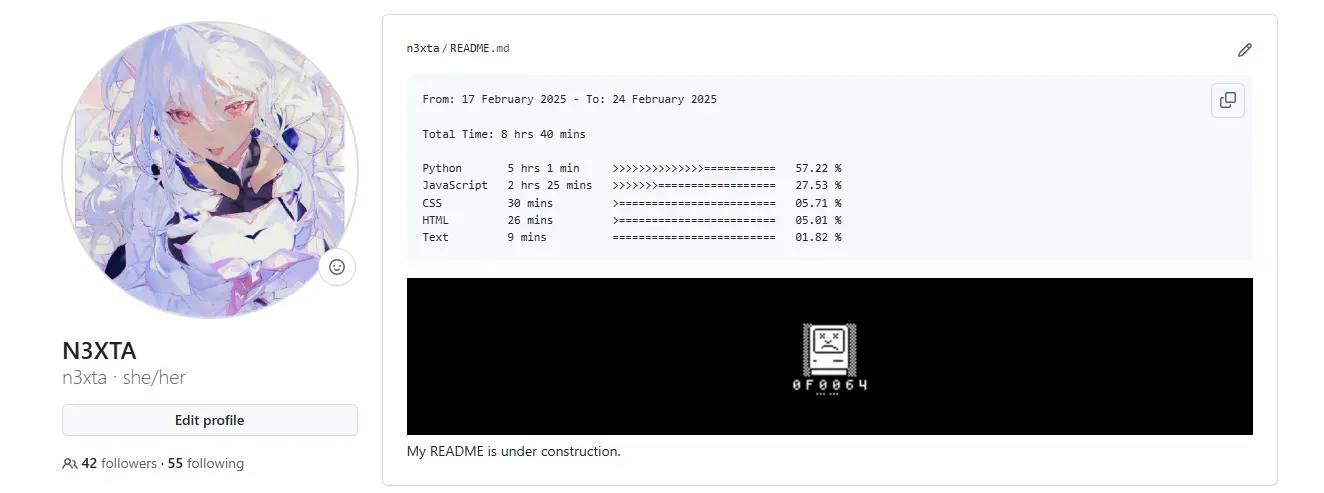
I actually quite like Apple’s early interface aesthetics. The YouTube homepage where I submit assignments, my personal GitHub profile, and many more all retain traces of that design language.
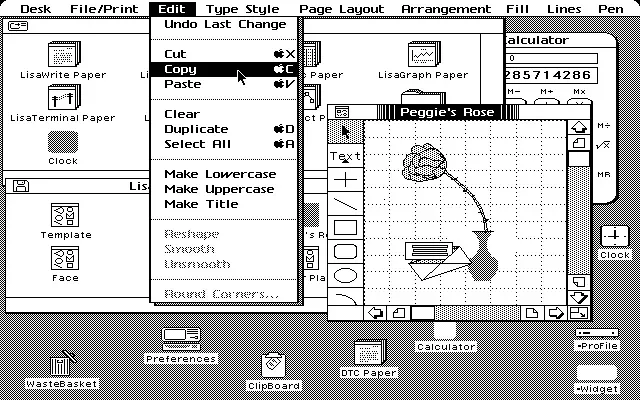
Most early computers used dark backgrounds simply because CRT monitors, by default, displayed black when inactive. Text appeared in fluorescent green or white. But with the advent of systems like Xerox Alto and Apple Lisa, screens turned overwhelmingly white, this was seen as a more paper-like, beginner-friendly visual mode. Yet, American Artist argues that this shift was more a symbolic act of erasure.
White space in GUI mimics office paper, subtly reinforcing a corporate work environment. More importantly, it erases black as a default state. GUI didn’t just make screens white; it also abstracted computing itself, replacing command-line precision with icons and drag-and-drop actions. On the surface, this made computers easier to use, but it also severed users from understanding the underlying system. You could now only interact with the computer in the way it wanted you to—not on your own terms.
The author argues that this “unified interface” and obsession with “user-friendliness” were also mechanisms of control over possibility. Earlier computers allowed multiple ways of interaction (paper tape, toggle switches, binary input) whereas GUI streamlined and homogenized user experience, and by extension, ways of thinking.
Embracing the Black Screen
The author introduces a deeply provocative concept: Black Gooey. If the “white GUI” represents standardization, smoothness, and the erasure of blackness as a background, then Black Gooey embodies complexity, opacity, and a return to multiplicity.
- This means reclaiming command-line interfaces, bringing back the ability to deeply engage with the system rather than being confined to the surface-level interactions of GUI.
- Black Gooey resists the pressure to make everything polished and frictionless. As referenced in Fred Moten and Jared Sexton’s works, “black” often represents boundless potential—an unfixed, generative space where new possibilities emerge.
Technically speaking, black was always the default: screens begin as black when no light is emitted. White, on the other hand, requires constant energy input to keep pixels illuminated. This was especially true for CRT displays. The white GUI we now take for granted was essentially a matrix of glowing white dots, achieved through higher power consumption and computational effort.
The author likens this to a fundamental truth: blackness is the container of all potential light, while whiteness is an artificial overlay. And this layering symbolically asserted the dominance of white cultural paradigms.
A particularly striking argument the author makes is this: slowness and brokenness, when deployed against mainstream systems, become forms of resistance. Modern operating systems are obsessed with fluidity and uninterrupted interaction, which in turn disempowers the user—they are no longer able to pause, question, or intervene in the system’s logic. If an interface were to incorporate pauses, command-line moments, or black screens, it would force users to confront the machine’s processes instead of simply being absorbed into a seamless white environment.
Personal Thoughts
In today’s world of hyper-connected interfaces, we constantly chase “faster, smoother, more intuitive” experiences. But after reading Black Gooey Universe, I find myself craving the opposite—more pauses, more black screens, more moments of independent thought away from the whitewashed interface. The “blackness” the author speaks of isn’t just about screen color; it’s about preserving spaces for opacity, for ambiguity, for something that resists immediate consumption.
We may not be able to instantly dismantle the white-screen GUI paradigm, but at the very least, we can train ourselves to be more aware:
- Tech products are never neutral—question the narratives of “objectivity.”
- Black/white isn’t just an aesthetic choice—it encodes deeper power structures.
- The divide between users and programmers isn’t inevitable—it’s a result of deliberate simplification.
- By pushing against the boundaries of mainstream interfaces, we might reclaim new ways of seeing and imagining.